
The Current State of BNPL in Bangladesh
BNPL in Bangladesh is past the experiment stage. Here is the market size, who is competing, and why regulation still lags demand.

Adnan Bin Pulok
Author
Featured
bnpl
fintech
bangladesh
payments
# The Current State of BNPL in Bangladesh
Buy Now, Pay Later (BNPL) is moving beyond being a Western checkout trend and becoming an emerging form of consumer credit in Bangladesh.
In 2025, Bangladesh's BNPL market was estimated at around **USD 1.17 billion**, growing at roughly **18.1% CAGR from 2022 to 2025**. Estimates put the market at **USD 1.31 billion in 2026** and around **USD 2.06 billion by 2031**. These are market estimates, not official Bangladesh Bank figures.
## Why BNPL Fits Bangladesh
Traditional consumer credit has limited reach, while digital commerce continues to expand. BNPL gives customers the ability to split a purchase into smaller payments instead of paying the full amount at checkout.
For merchants, this can make higher-value purchases more accessible and reduce friction during checkout.
## How BNPL Works
The basic BNPL model is simple:
1. A customer selects BNPL at checkout.
2. The customer is approved for an eligible purchase.
3. The purchase is divided into scheduled instalments.
4. The merchant receives settlement according to the provider's agreement.
5. The customer completes the remaining instalments over time.
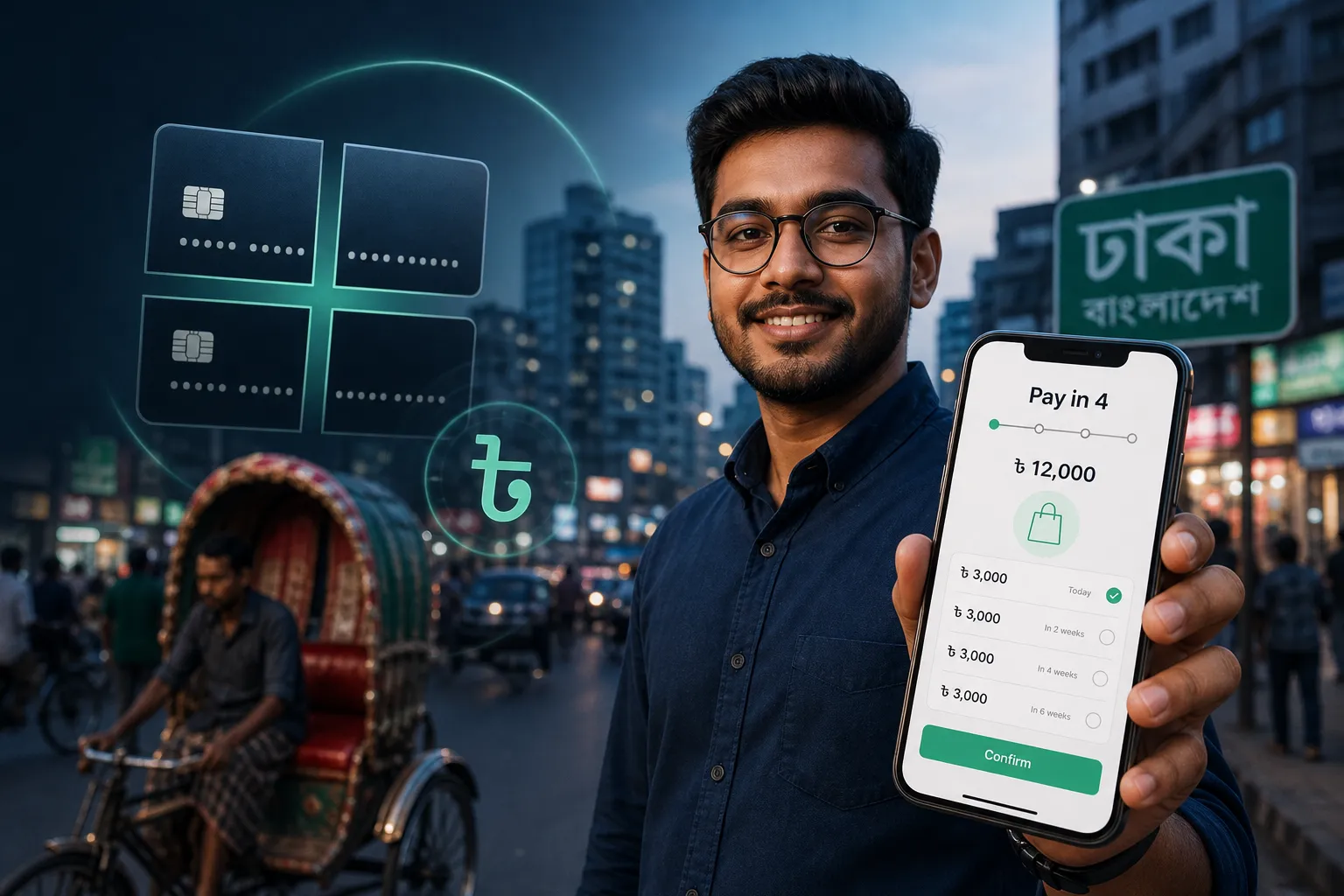
Different providers may use different repayment structures. **Pay-in-4** is one of the emerging formats, where the purchase is divided into four equal payments.
## The Market
Bangladesh's BNPL ecosystem includes banks, digital-commerce companies, MSME-focused platforms, and specialist fintechs.
Companies such as **Muthopay** are exploring BNPL, while **Kisti** is preparing to launch a Pay-in-4 product offering four equal instalments at **zero interest for consumers**. Kisti currently describes itself as an upcoming service rather than an established live network.
The biggest competition may ultimately be over the **checkout moment**. A provider that works across websites, physical stores, social commerce, and marketplaces could have a significant advantage over a product tied to only one platform.
## Regulation
Bangladesh does not currently appear to have a standalone BNPL-specific regulatory framework. However, Bangladesh Bank is increasingly formalising digital credit.
Its 2026 framework allowing banks to provide fully digital unsecured loans of up to **BDT 50,000** is an important sign of the regulatory direction, although e-loans and BNPL are not the same product.
As the sector grows, regulation around digital credit, merchant settlement, consumer protection, data handling, and responsible lending is likely to become increasingly important.
## Consumer and Merchant Perspective
For consumers, the main attraction is straightforward: **buy now and spread the payment without consumer interest**.
For merchants, BNPL is mainly about **conversion and cash flow**. The important questions are:
1. When will the merchant receive payment?
2. What is the merchant's actual cost?
3. Who handles failed payments and collections?
4. Where can customers use the service?
## What Comes Next?
In 2026, Bangladesh's BNPL market is **past the experiment stage but not yet a universal payment utility**.
The companies most likely to succeed will be those that combine strong underwriting, reliable merchant settlement, simple checkout experiences, and broad merchant acceptance.
Bangladesh does not need a direct copy of Western BNPL models. The strongest opportunity is a **simple, transparent, locally designed instalment product built around how Bangladeshi customers actually shop and pay.**